
Becoming American, Coping in Germany

“Write to me and let me know if you like America, but please be honest…”

The Weinhardts' first letter to John after his arrival in the United States.
Hans—now John—received frequent letters from his family, usually with each member writing an individual message commenting on both local events and the impressions of the United States they were gathering from the news they received from Lafayette. John moved on from William’s office to a job as a sales clerk and elevator operator at a department store. While John was adjusting to life in the United States, his family experienced a number of setbacks. His sixteen-year-old brother Philipp had received a half-scholarship to attend a renowned boarding school but was unable to take up the offer because Johann could not afford to pay the remainder. Instead, Philipp began working for Schmotzer, a Windsheim company that produced agricultural equipment, in a position that combined training to become an engineer with factory work. Philipp “has now resigned himself to it,” Marie wrote, though he never directly expressed his disappointment to John. Marie herself experienced hearing difficulties that required her to give up her office job and postpone the wedding she had been planning. Most tragically of all, Johanna was critically ill with tuberculosis and her condition steadily weakened over the spring.1
The Weinhardts also kept John informed about changes in the political situation in Germany. The appointed president of the German republic, Friedrich Ebert, died only a few days after John’s arrival in the United States. Ebert was succeeded by Paul von Hindenburg, who in May 1925 became Germany’s first popularly elected president. John’s parents were pleased with the results, with Johann noting that their home region of Bavaria and a couple of others had “voted well,” for Hindenburg, while Margarete expressed her hope that Hindenburg's election would mean “things will get better for the civil servants” like Johann and “life will no longer be so miserable.”2 Johanna, however, continued to suffer and passed away in late June, a few weeks short of turning twenty-three. John wrote back to share his grief and to send money for flowers to put on his sister’s grave.3
While few letters from John to his family survive, the expressions of thanks in their letters for money and other gifts he sent indicate he was working diligently to help his family. Yet John was also turning his attention to the possibility of settling in the United States permanently, telling his parents that William had urged him to consider it and seeking their advice. “This is something you must decide for yourself,” Johann advised.4 John moved on from his store job to working as a scrap paper salesman, but eventually returned to working with William, this time as a detective. Johann used his connections to reputable dog breeders in Germany to help William’s business by purchasing German shepherds on his behalf and shipping them to the United States to serve as police dogs.5

“I drink heartily to your health. You can join me with a lemonade,” Philipp joked in this letter alluding to Prohibition.
Philipp’s letters suggest the two brothers frequently compared thoughts about the differences between the United States and Germany. In one letter, Philipp described drinking wine at a party and joked that because of Prohibition in the United States John could only toast with lemonade.6 In another, he noted his admiration for the American “as a businessman” but felt that the United States had produced no one who compared with the literary greats of Germany. He expressed his hope that John would acquire business experience in the United States and then return to Germany so that one day they could start their own company. The brothers shared an interest in various kinds of technology; Philipp sent John catalogs for German photography equipment, and in turn asked for issues of the American magazine Popular Mechanics. Philipp put his engineering training to use by making time-saving devices for their parents and in one letter proposed that he would make a shortwave radio and then send John the plans so that he could build his own to speak with the family.7
Despite the excitement new kinds of technology brought to their lives, struggle and dissatisfaction hung over the news John’s family shared. On several occasions, John’s parents warned him that other relatives might try to coax money out of him or William and Carrie.8 Philipp was resentful of the effects of the war settlements Germany had to pay on the country's finances and its reputation. He lamented that most American tourists who visited Germany only saw the big cities and did not see the despair engulfing smaller communities like Windsheim or Schwabach, their original hometown. He pointedly argued that those who had gone overseas often lost sight of their identity: “many emigrant Germans prematurely think of themselves as Americans, but don’t seem to understand that as a result, they are viewed with disdain.”9

John’s letter announcing his return visit to Germany.
John, for his part, increasingly saw himself as an American. By the start of 1930 he was in the final stage in his naturalization. On January 11, he wrote a letter to thank his parents for the cookies, pralines, and gingerbread he had received as holiday treats. He shared that he had celebrated a white Christmas in Lafayette with William, Carrie, and some other Germans. He also announced that he would visit Germany that spring for the first time since 1925 and planned to travel on the Norddeutscher Lloyd ship Bremen. “It costs nearly $20 more, but then it is so much faster than the others,” he explained, suggesting how far he had come since his arrival in the United States as a teenager with William’s support. He was fortunate to receive his citizenship papers in April, preventing him from having to write to Washington to request re-entry under his visa.10
 |
 |
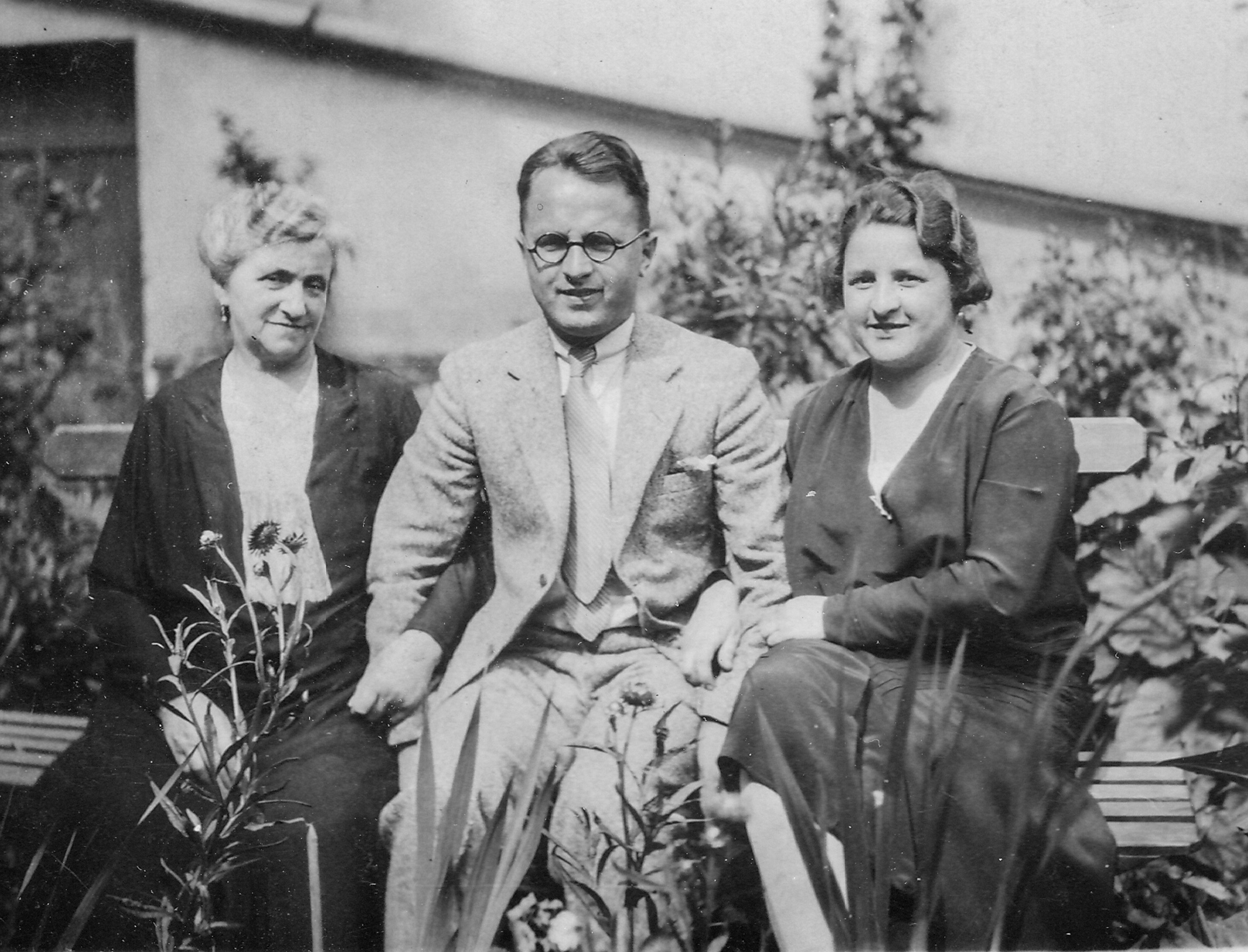
John with his mother, Margarete, and sister Marie during his 1930 visit |
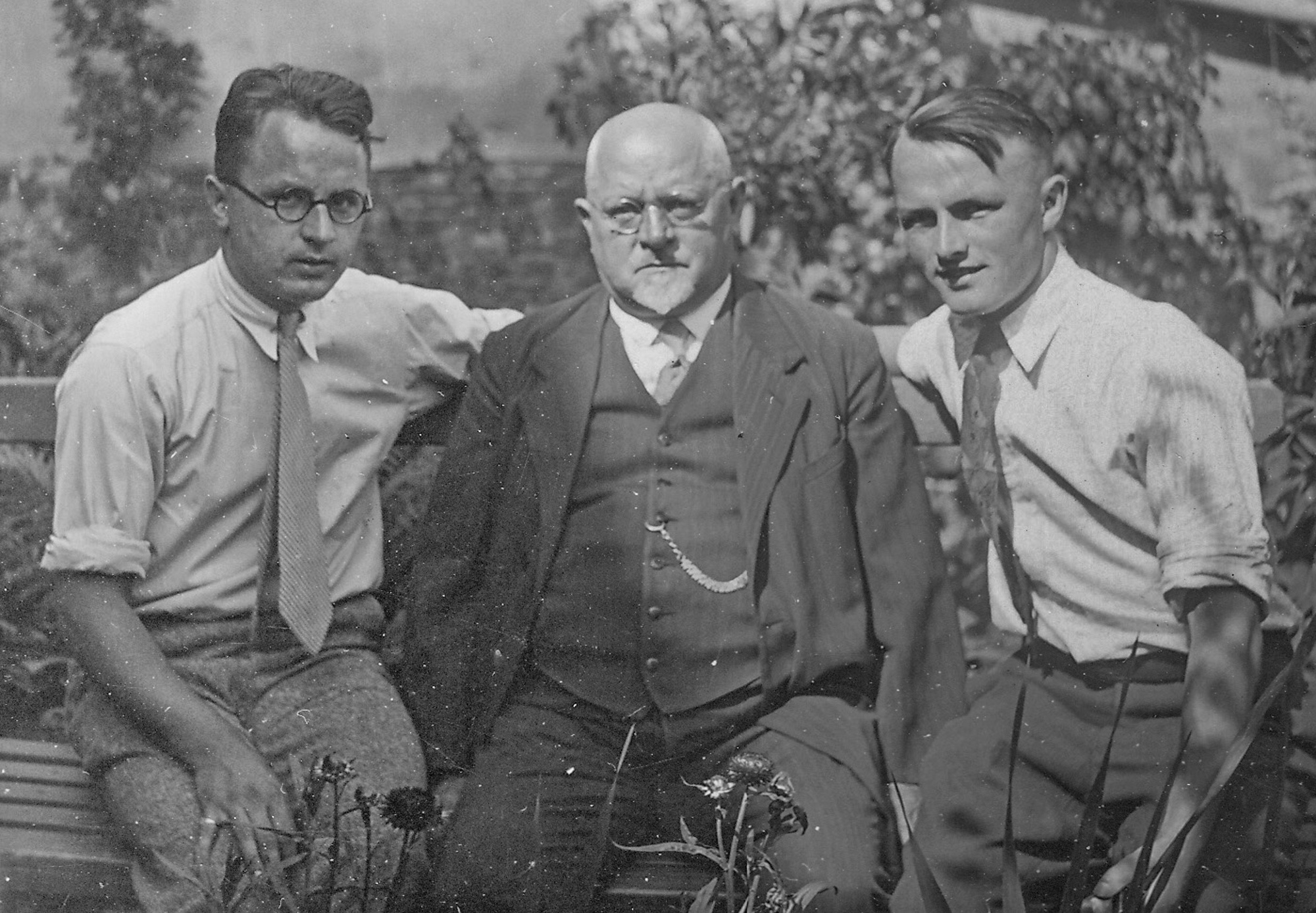
John with his father, Johann, and brother Philipp during his 1930 visit |
Halfway across the Atlantic to Germany, John sent a telegram greeting his cousin William from the Bremen that was reported in Lafayette's daily newspaper, suggesting how closely he had become integrated into the community there.11 John made his way to Windsheim and saw his family for the first time in five years, taking photographs to commemorate the reunion. On July 25, 1930, John returned to the United States aboard the Bremen. John lived with William and Carrie until he got married, in 1936, to Eleanor Bauer. He entered law enforcement, graduating in 1937 from a special training course at the FBI National Academy in Washington, D.C., and then served on the Lafayette police force for many years, rising to the rank of chief.
After World War II, John eventually sponsored the immigration to the United States of his brother Philipp and Philipp's family, mirroring the invitation that his cousin William Weinhardt had extended decades earlier. John remained an active member of his community until he passed away at the age of ninety-one in 1999.
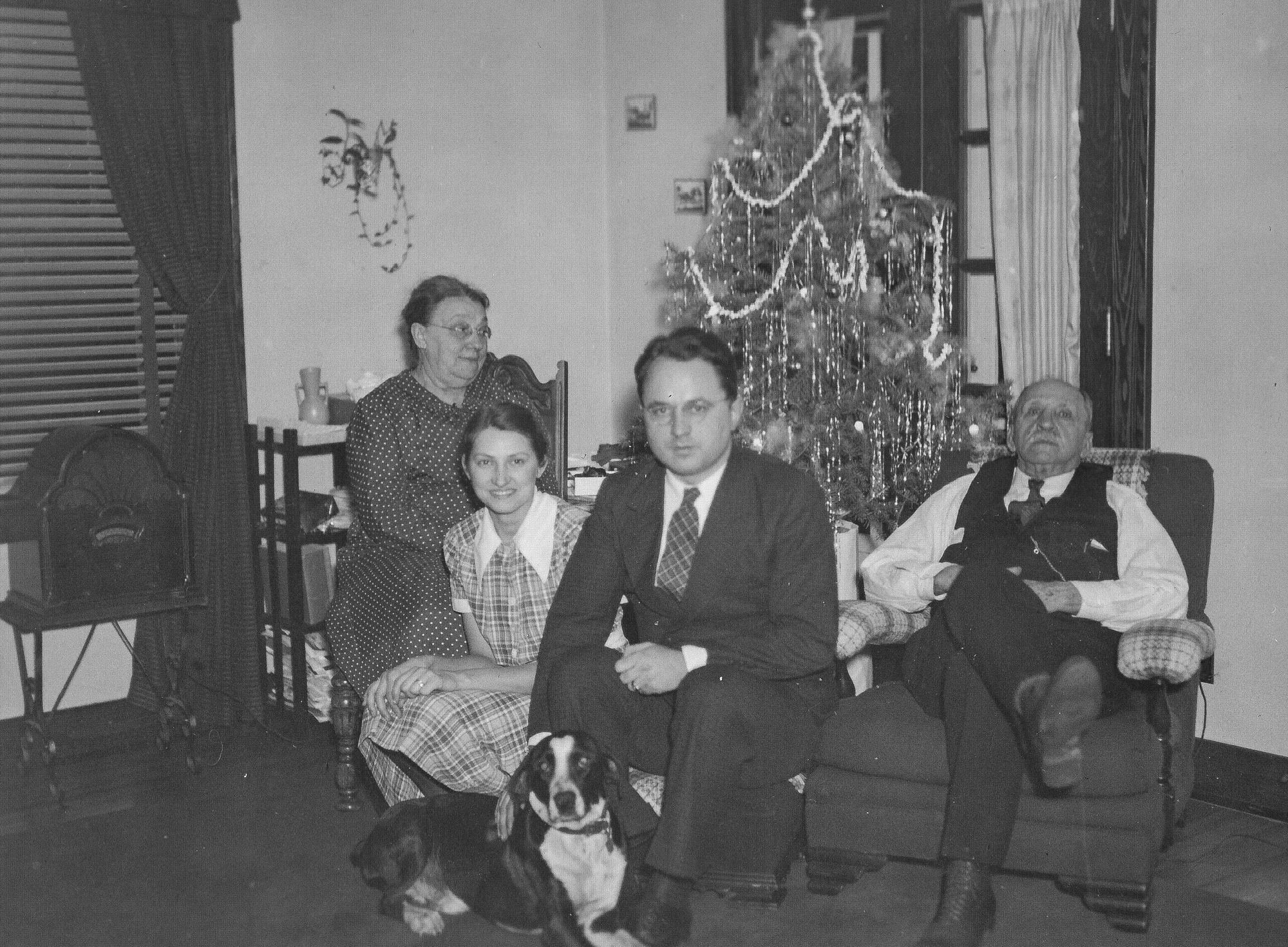 |
John celebrating Christmas with his wife, Eleanor, and Carrie and William Weinhardt, c. 1936-37 |
-
“John Weinhardt Sends Greetings From Ocean,” Lafayette Journal and Courier, April 29, 1930, p. 6.
Footnotes
|
Acknowledgments
Our thanks to the Weinhardt family for sharing their letters, photographs, and other family documents.