
Crossing into a New Life

“Hoping to see Hans safe in this country in a short time, I am, as ever,
“Yours,
“William W. Weinhardt”
Hans was not able to leave Germany until early 1925, when he received his visa to the United States. His option to emigrate was shaped by new legal developments in the United States. In 1921, anti-immigration activists had successfully passed the Emergency Quota Act, the first United States law to place numerical restrictions on immigration from Europe on the basis of “national origin.”1 A second restrictive immigration law, the Johnson-Reed Act, was passed in May 1924, implementing a temporary revision of the 1921 quota laws pending the establishment of an even tighter immigration system, which occurred in 1928. The new laws shifted control over immigration from border entry points like Ellis Island to consular offices that now gained the power and discretion to decide which applicants would be issued visas permitting them to enter the United States legally.
Hans made his preparations to travel to the United States under the shadow of this newly-established regime. Its numerical quotas were based on the European immigrant population as recorded in the 1890 Census, which tended to favor immigrants from northwestern Europe, including Germany, over immigrants from southern and eastern Europe. German-Americans had not been strong advocates for nativism, but in the wake of anti-German wartime sentiment the community largely acquiesced to the creation of the national quota system. Germany was in a privileged position relative to most other European countries, and the quota for white European immigrants was far higher than for other regions of the world.2
Nonetheless, the number of Germans who wished to immigrate to the United States still greatly exceeded the allotted number of visas—just over 51,000 for the fiscal year that began in July 1924. “The ban on German immigration to the USA,” as Hans described it in a June 1924 letter, “is being canceled as of July 1. The US Consulate in Munich started to process visa applications on June 1.” Would-be emigrants like Hans, in Germany and in other countries, had to keep a close eye on the American bureaucracy in order to secure a visa from a consular office and then rush to embark for the United States as early in the fiscal year as possible before their nations’ quotas were exhausted.3
-
The concept of “national origins” and its use in creating the quota system are described in Mae Ngai, Impossible Subjects: Illegal Aliens and the Making of Modern America (Princeton, N.J.: Princeton University Press, 2004), 18–37.
-
Ethelbert Stewart, “The New Immigration Quotas, Former Quotas, and Immigration Intakes,” Monthly Labor Review, August 1924, p. 5. The quota for Germany, for example, dropped from 67,607 under the 1921 act to 51,227, while the quota for Italy plummeted from 42,000 to just under 4,000.
-
Aristide R. Zolberg, A Nation by Design: Immigration Policy in the Fashioning of America (Cambridge, Mass.: Harvard University Press, 2008), 244–267. For immigrants from northern and western Europe, the most privileged group, applications for visas exceeded the quota by a ratio of three to one (p. 264).

Hans Weinhardt to William Weinhardt, June 1924.
Passport photo of Hans Weinhardt, 1924
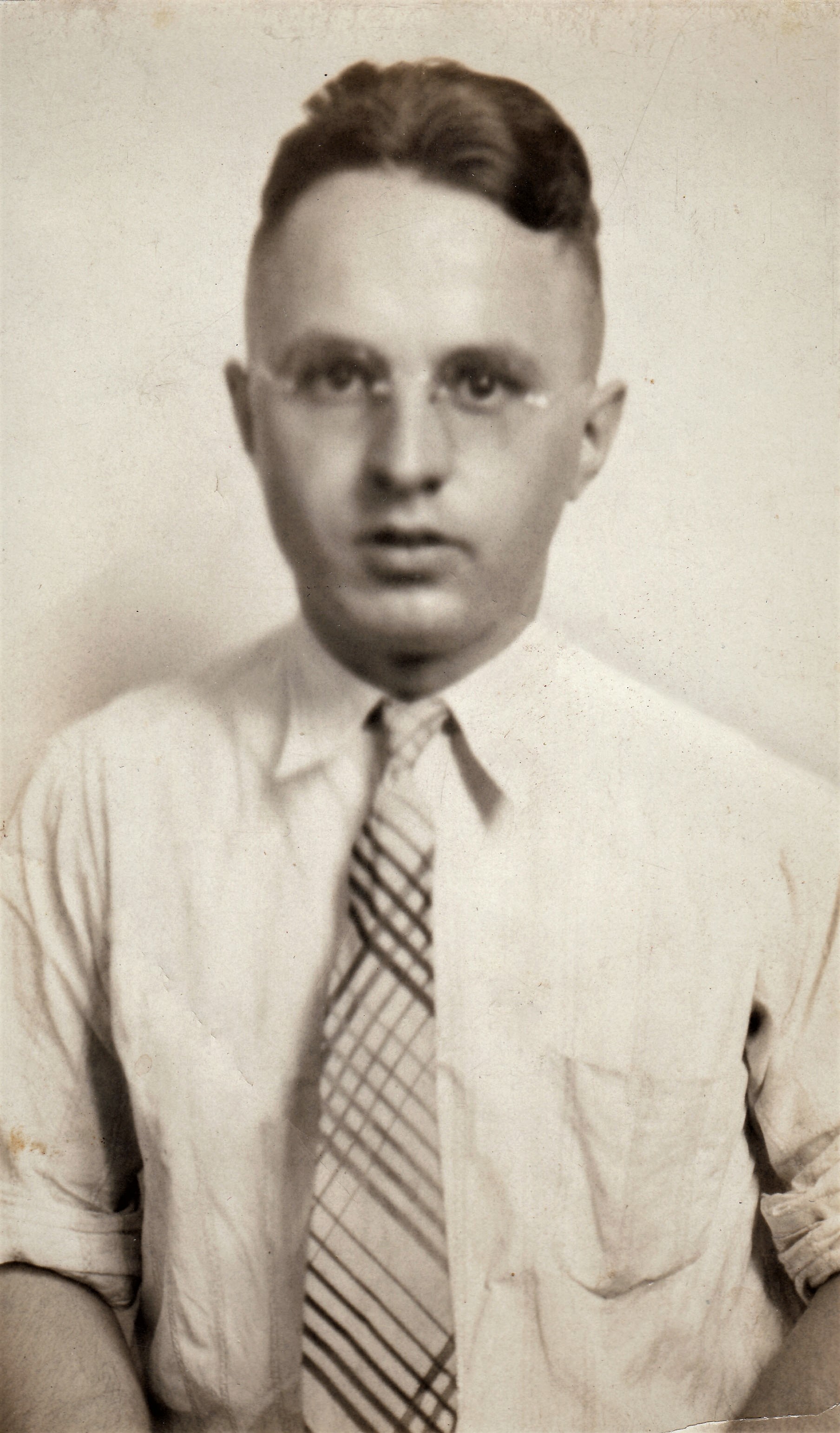
In Hans’ case, it was more than a year until he was able to travel to Munich in January 1925. He visited the American consulate and had to wait on line for three and a half hours with other would-be immigrants before he was able to obtain an interview and receive his visa. The next day he picked up the travel documents for his voyage from Hamburg. Only a couple of weeks later Johann traveled with Hans to Hamburg so he could see him off to the United States. The days before Hans’ departure combined bureaucratic details, such as being examined by an American doctor, with sightseeing around Hamburg. Finally, on his final night in Germany, Hans and his father joined with several other passengers for a night of beer and dancing to celebrate the start of his new life.4
-
John V. Weinhardt diary, private family collection.
Hans left for the United States on the seventh of February on the White Star Line steamship Arabic. During the passage, Hans distracted himself from his seasickness by writing post cards to his family and keeping a travel journal recording his days aboard the ship. The Arabic stopped in the harbors of Southampton, England, and Cherbourg, France to load additional passengers and more freight. Before the ship reached New York, it stopped briefly in Halifax where a Canadian doctor examined all the travelers. On the twentieth of February, 1925, after a customs inspection, Hans disembarked the Arabic and traveled by ferry to Ellis Island. There, each passenger was thoroughly examined by eight different doctors and then sent to show their traveling papers. After four hours on Ellis Island, the ferry brought Hans and the other passengers to their train stations on the mainland.

The White Star Lines ship Arabic, which carried Hans from Hamburg to Ellis Island. The ship had originally been built as the S.S. Berlin for the North German-Lloyd Line, but was confiscated during World War I and renamed. Courtesy of the Mariners’ Museum.
Two days later, on February 22, Hans arrived in Lafayette and met William and his wife, Carrie, for the first time. William was sixty-three years old, making him just a few years older than Hans’ father Johann. Carrie, who also came from a German-American family, was fifty years old. “Hans has always been a good boy for us as we hope he will be for you,” Johann wrote to the couple. “It was his wish to go to America, and in God’s name we have given in to it. Dear folks, we beg you to take him into your care and shelter him from bad influences.”5 William and Carrie did not have children of their own and quickly welcomed Hans into their home not as a temporary guest but for good; he would end up living with them for the next ten years, until he married.
Although William and Carrie were not wealthy, they were known for their generosity and well-respected in the community. The day after Hans’ arrival, he was introduced to a few members of the German community in Lafayette. “There are more Germans living here than I had assumed,” Hans commented in his diary.6 William Weinhardt’s friendship with the elderly immigrant John Jungmeier suggests Lafayette’s German-American community was tightly knit even if all of its members did not actually know German. According to the 1920 Census there were some 800 German-born residents in Tippecanoe County, where Lafayette was located. Almost ten percent of Indiana residents had a German background, but anti-German prejudice appeared there as in other parts of the country during the First World War; for example, teaching German was barred in Indianapolis schools in 1918.7 Nonetheless, William’s German heritage had not kept him from being elected Tippecanoe County sheriff that same year.8
-
Johann P. Weinhardt to William W. Weinhardt, March 13, 1925.
-
John V. Weinhardt diary.
-
U.S. Bureau of the Census, Fourteenth Census of the United States, Taken in the Year 1920, vol. 3, Population, p. 304; Paul J. Ramsey, “The War against German-American Culture: The Removal of German-Language Instruction from the Indianapolis Schools, 1917–1919,” Indiana Magazine of History 98, no. 4 (Dec. 2002): 285-303, 289, 298.
-
William W. Weinhardt, “An Appreciation,” Lafayette Tippecanoe County Democrat, Nov. 8, 1918.

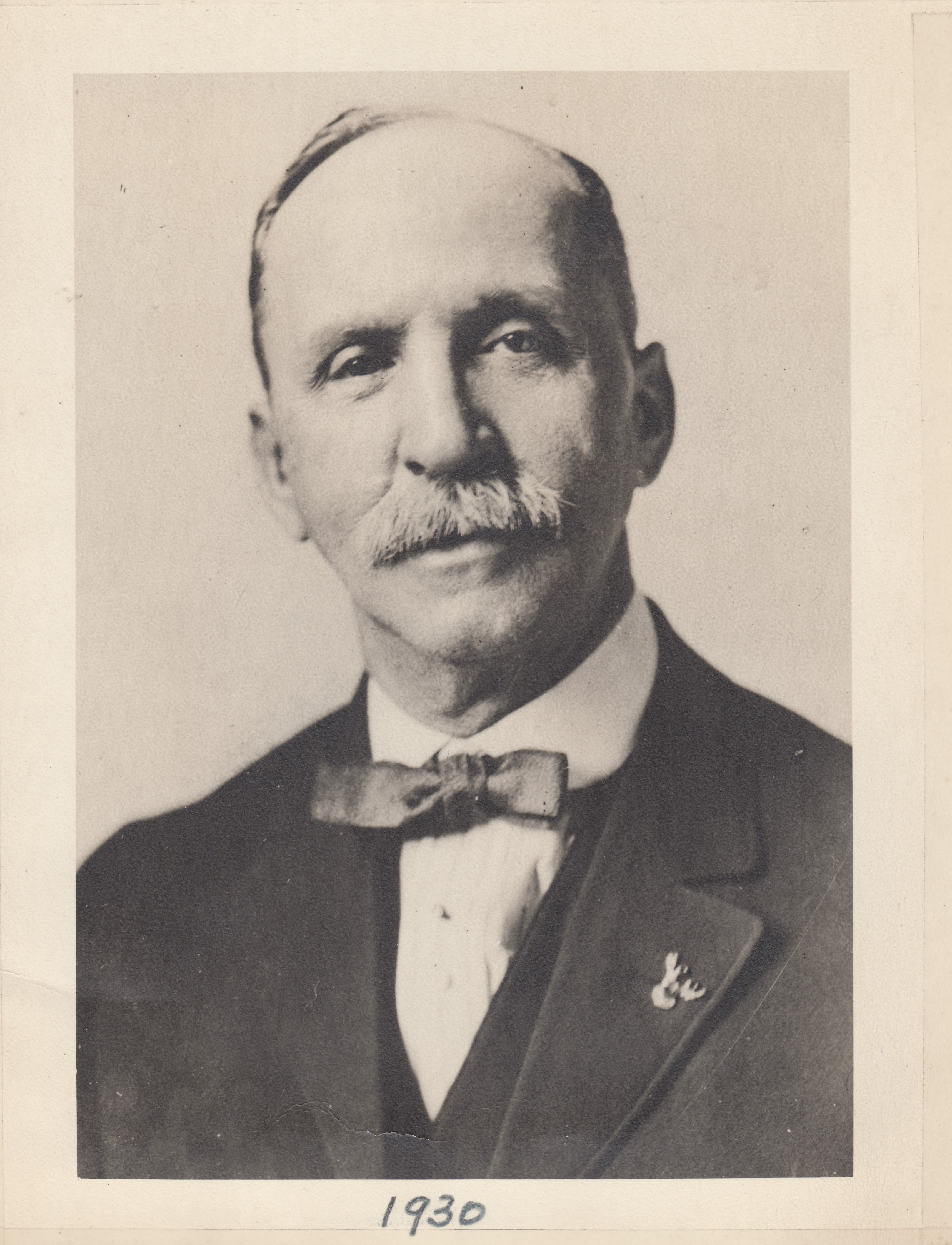
Photograph of William Weinhardt, 1930
“Hans has always been a good boy for us as we hope he
will be for you,” Johann wrote to William in March 1925.
Before his election, William had had a successful career in law enforcement, first serving as a Lafayette police officer and then opening a private detective agency. Coincidentally, like Johann Weinhardt, William had been in charge of the local jail (where he and Carrie were recorded in the 1920 Census); after his term as sheriff ended he resumed operating his agency, known as Weinhardt’s Secret Service Bureau. Among other work, the agency was frequently called on to investigate bank robberies, kidnappings, and other dramatic crimes.
Hans spent his first days in Indiana helping out at William’s office with small secretarial tasks such as copying letters. His new German acquaintances assured him that “Everything will go well for me once I learn to speak English,” he recorded in his diary. Soon after moving to the United States, he began going by the name John or Johnny instead of Hans. “Aren’t you concerned about having so many names?" his sister Marie teased.9
Footnotes
|