
Letter of the Month: September 2020

Isaac Schweitzer to the Schweitzer family, September 18, 1867A letter from Isaac Schweitzer, an immigrant living in western Virginia, to his parents and sisters living in Mühringen, Württemberg. Collection: Schweitzer-Guggenheimer Letter CollectionTo read the complete transcription and translation of this letter, click the thumbnail at left or here. |
“Rosh Hashanah approaches with hasty steps and I know how unpleasant it would be for you to be without a letter...”
Twenty-two-year-old shopkeeper Isaac Schweitzer wrote these words to his family in the small community of Mühringen as he prepared to celebrate Rosh Hashanah, the Jewish new year, with his uncle Salomon’s family in Philadelphia at the end of September 1867. Isaac had arrived in the United States only a year earlier to make a living and considered himself already poised for future success. The holiday was a moment to reflect and be thankful for opportunities which would have been “unthinkable in Germany,” he wrote to the family members he had left behind—his parents, Hirsch and Malchen, and his younger sisters Louise (age 20) and Ernestine (age 16)—and he admitted that “I do regret that I did not leave already 5 years ago.”
Isaac had first reached the United States in summer 1866, sailing from Le Havre to New York on the ship Allemania. Three of his father’s brothers—Salomon, Joseph, and Abraham—had previously immigrated to the United States and gone into the dry goods business. By the end of the year, Isaac was living with his uncle Abraham in the town of Lexington, Virginia, and working as a clerk in his store. In an earlier letter home, he had noted that he was taking English classes and “know enough English so that I can talk to everyone in the store. People here say that they have never seen anyone who learned English as quickly as I did.”1
|
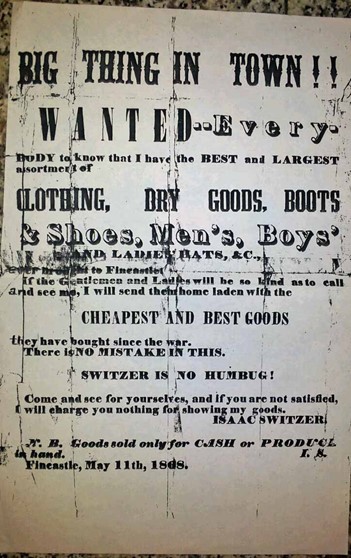
Soon, Isaac made his way to the village of Fincastle, located forty miles from Lexington in the Blue Ridge mountains, and began running a store of his own. While many young Jewish men who immigrated to the United States in the era started off as itinerant peddlers, it seems that Isaac’s uncles used their experience and financial backing to help start him off as a storekeeper. Isaac also came to know another Jewish family in the area, the Guggenheimers, originally from Osterberg in Bavaria, and eventually spent the winter of 1867–68 boarding with them. This kind of assistance was fairly typical in the Civil War era—helping both family members and others in their religious community to establish their own businesses was one way for Jewish immigrants to help the families in their networks maintain their religious and cultural autonomy rather than being subjected to a calendar and working conditions shaped by Christian traditions.2 Working with Abraham, Isaac launched into keeping the surrounding rural communities supplied with a variety of goods, using eye-catching broadsides to alert customers to what he had to offer. |
Broadside for Isaac Schweitzer’s store (here spelled “Switzer”), 1868. |
For both Isaac and Abraham Schweitzer, trips to larger cities to choose goods for restocking their stores were an important part of keeping their customers happy. In fall 1867, this brought them to Philadelphia. “We have been so busy with shopping,” Isaac told his parents, “we have to run around the whole day and at night we are so tired that we can barely walk.” He boasted that Philadelphia businessmen had been eager to sell him goods and that he was laden down with ladies’ clothing and other articles to sell back in Fincastle. The trip also gave Isaac the opportunity to celebrate the new year with Salomon and his wife and children. At the end of the trip Isaac took Salomon’s sons Julius and Simon with him to Fincastle “since I cannot get ready with so many things without help.”
Isaac’s letter acknowledged how deeply he missed his family, wishing them “strength to bear anything” despite their “tears” and promising to write with additional family news after visiting his uncle Joseph in Harrisburg, Pennsylvania. While Isaac could turn to his uncles and cousins for career guidance, the intertwining of family and business relationships were not always easy to navigate—in an earlier letter to his parents, Isaac had complained that Abraham’s brother-in-law Henry, who also worked in the Lexington store, “sees that I can do things better than he does [and] no longer does anything at all,” but urged them not to pass on his comments to the rest of the family.3
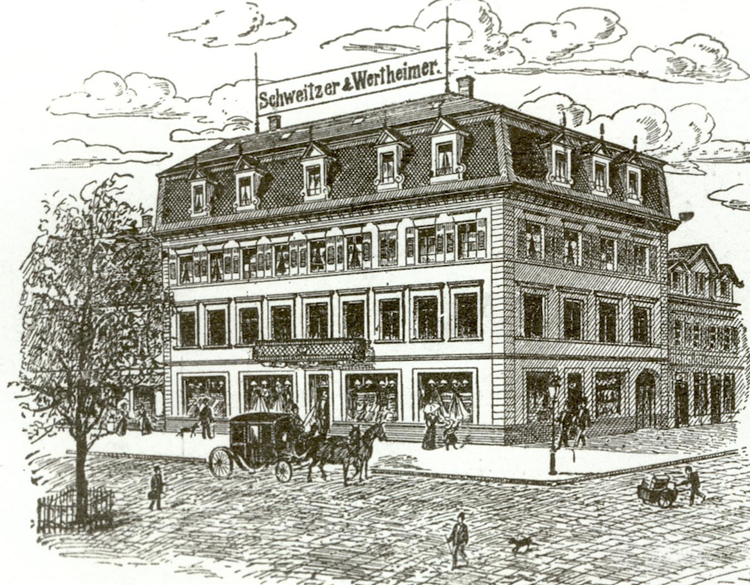
In 1870, Salomon decided to move his family to Fincastle and to shift from a silent partner in the store to actively helping to manage it. Isaac, however, came to distrust his uncle’s business skills and decided to move on from Fincastle and go into business in Baltimore. Despite his setbacks, Isaac’s time in Fincastle had one happy result. He remained in touch with the Guggenheimer family and, in 1875, married their daughter Isabella. The next year, shortly after the death of Isaac’s mother, the couple left the United States for Germany. Isaac and Isabella would end up raising a family in the town of Frankenthal, in Pfalz. Isaac eventually opened a department store of his own there—in partnership with Ernestine’s husband Hermann Wertheimer—which became a lasting success.
-
Isaac Schweitzer to Schweitzer family, December 2, 1866.
↩
-
For description of the experiences of Jewish merchants in the 19th-century United States, see Rowena Olegario, A Culture of Credit : Embedding Trust and Transparency in American Business (Cambridge, Mass.: Harvard University Press, 2009), 119–138, and for a discussion of the differences between peddlers and merchants, see Hasia Diner, Roads Taken: The Great Jewish Migrations to the New World and the Peddlers Who Forged the Way (New Haven, Conn.: Yale University Press, 2015), 170–175.
↩
-
Isaac Schweitzer to Schweitzer family, December 2, 1866.
↩
|
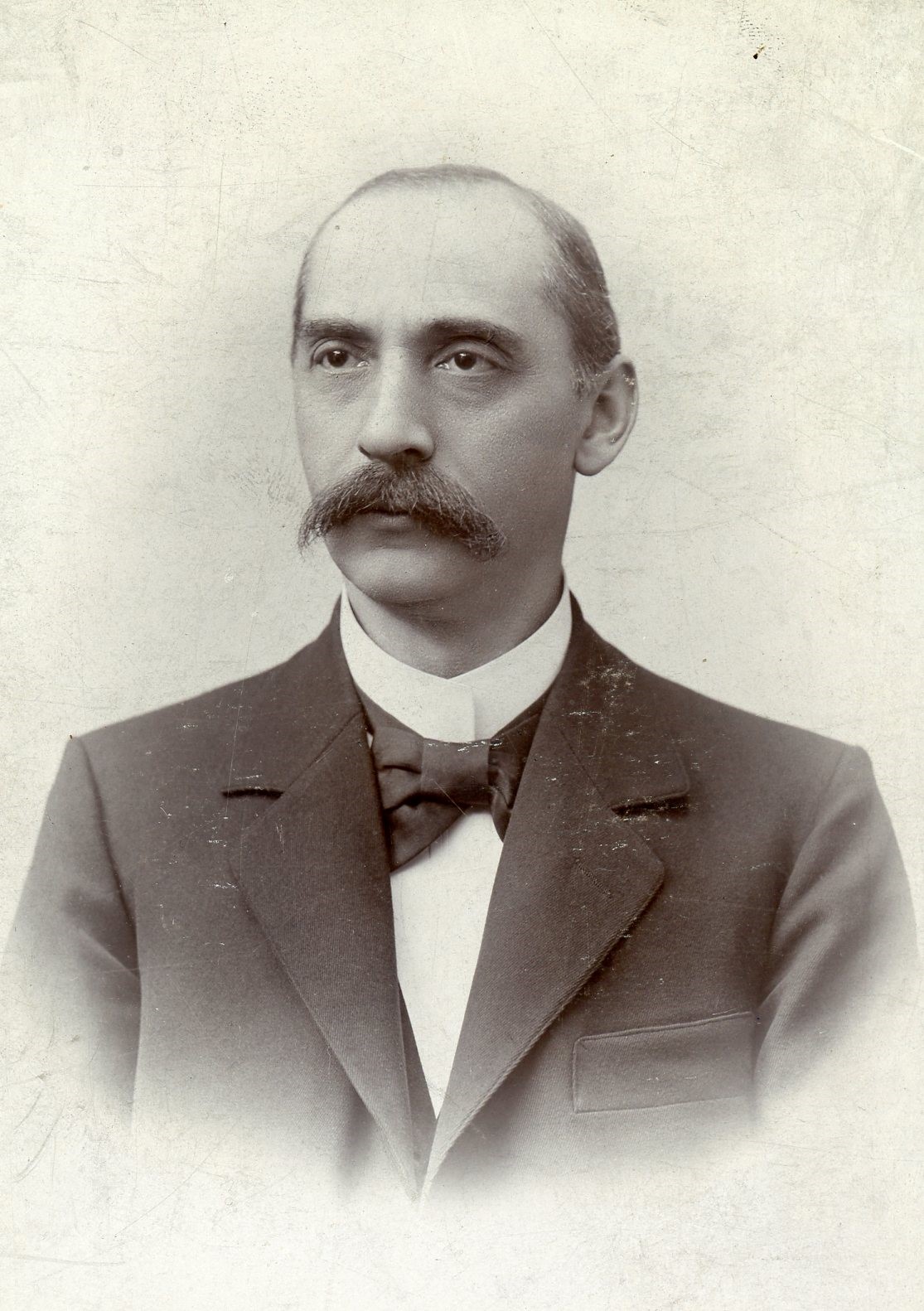
Photograph of Isaac Schweitzer, c. 1888. |
Schweitzer & Wertheimer store, Frankenthal, c. 1889 |
Our thanks to Peter Schweitzer, contributor of the Schweitzer-Guggenheimer letter collection, for his deep research into the lives of both families used in writing this account, and to Renate Evers, transcriber and translator of the letters. |